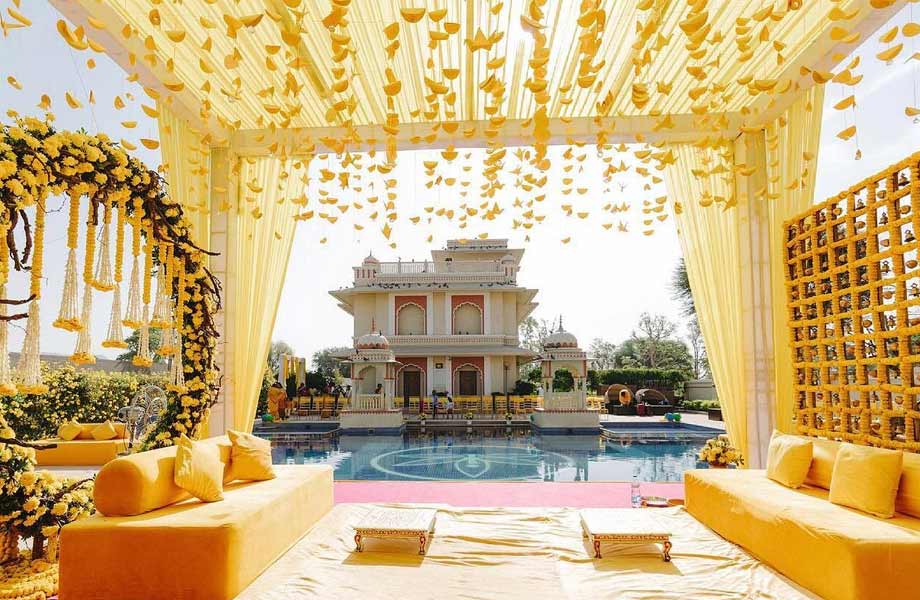
What is the Best Type of Venue for an Intimate Wedding?
Planning a micro-wedding? Discover the best intimate wedding venues, from cozy backyards to historic inns, and find the perfect fit for your small guest list.
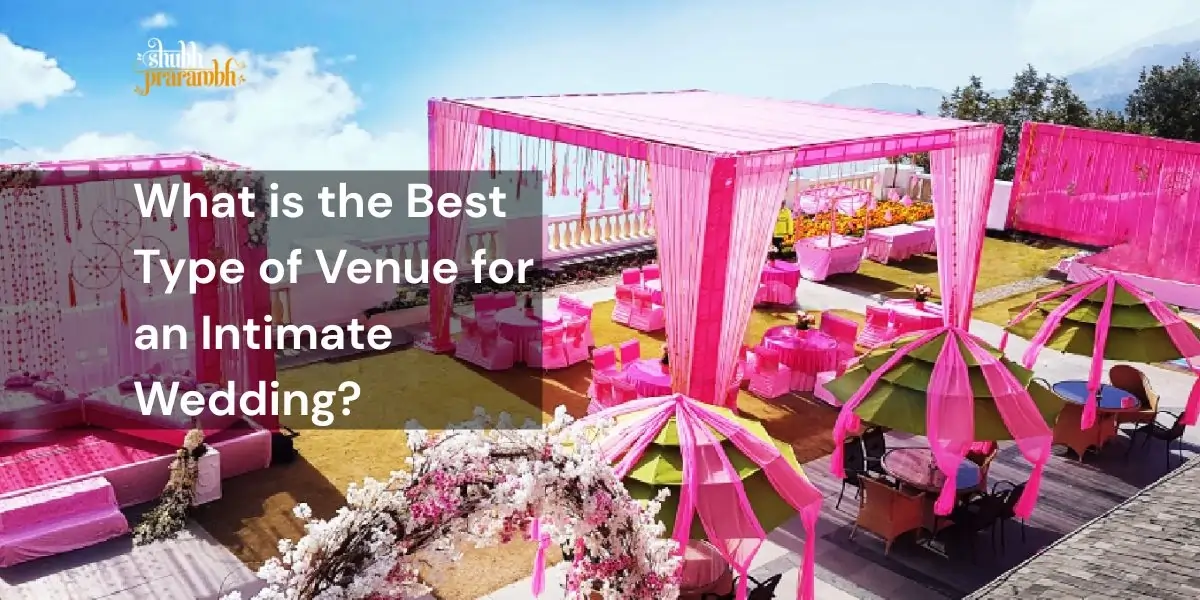
Here's a scenario that plays out more often than most wedding professionals admit. A couple books a 300-capacity ballroom for their 45-person intimate wedding. The venue looks stunning in the proposal photos. On the day, it feels like an empty conference hall with flowers. The food is excellent, the photography is beautiful — but the atmosphere never arrives.
The problem wasn't the budget. It wasn't the caterer or the décor team. It was the venue type. And that single decision quietly undermined everything else. So the question that matters most — what is the best type of venue for an intimate wedding? — deserves a clear, practical answer that goes beyond generic advice.
This guide is written for wedding planners, event managers, hospitality teams, and corporate clients who coordinate intimate celebrations. We'll walk through venue types, decision frameworks, real costs, and specific recommendations for Agra and across India — so you can advise clients with confidence and book the right venue every time.
What Exactly Is an Intimate Wedding? | What Does an Intimate Venue Mean?
Before choosing a venue type, it's important to agree on a working definition. In the Indian wedding industry, "intimate" is used loosely — some planners apply it to anything under 150 guests. For the purpose of venue selection, the most useful definition is a wedding with 10 to 75 guests where every person in the room has a direct, meaningful relationship with the couple.
At this scale, the dynamics of a venue change fundamentally. Every element of the space is visible and felt by every guest. There is no crowd to fill empty corners. The room's energy depends entirely on how well it holds a small group, which means the venue type determines whether the experience feels warm and intentional, or sparse and awkward.
Intimate vs. Micro-Wedding vs. Elopement
- Intimate wedding (10–75 guests): Full celebration with multiple events — ceremony, reception, mehendi, cocktail evening — at a human scale
- Micro-wedding (under 20 guests): Stripped-back format, often just immediate family, focused on the ritual itself
- Elopement: The couple and two witnesses; the ceremony is private and guests experience it through photos or video after the fact
This distinction matters because each format has a completely different venue requirement. This guide focuses on intimate weddings the full-experience, intentionally small celebration because that's where venue type decisions are most consequential and most often made incorrectly.
Benefits of Choosing the Right Venue Type for an Intimate Wedding
For B2B professionals — planners, coordinators, and hospitality managers — understanding the benefits of correct venue-type selection is what separates average client outcomes from exceptional ones. Here's what the right venue type actually delivers.
- Natural Atmosphere: The right venue type creates emotional warmth without relying entirely on décor spend. Heritage spaces, intimate courtyards, and boutique resorts do the work that decorators can't manufacturer
- Scale Alignment: A venue matched to the guest count feels full, alive, and intentional. Guests move toward each other naturally. Conversations form without distance. The dance floor looks used, not abandoned.
- Budget Efficiency: Venues with inherent character reduce the décor budget required to create atmosphere.
- Photo Authenticity: Intimate weddings photographed in scale-appropriate venues look and feel real. The images don't have empty background chairs or cavernous ceilings making the group look small.
- Client Satisfaction: Couples who attend their own intimate wedding in the right venue type consistently report higher satisfaction scores than those in oversized venues — even when other elements are identical.
- Referral Generation: Memorable intimate weddings in distinctive venues generate disproportionate word-of-mouth referrals. Guests share and recommend experiences they couldn't replicate themselves.
"The best intimate venues in India are never found on booking platforms. They exist in the contact books of planners with deep local relationships — and they stay booked through those same channels."
— Shubh Prarmbh, Wedding Planner
What Is the Best Type of Venue for an Intimate Wedding? | Best Type of Venue for an Intimate Wedding in India
There is no single universal answer to what is the best type of venue for an intimate wedding — but there is a framework that makes the answer clear for every specific client. Here are the eight venue types that work best at intimate scale, with honest assessments of each.
1. Heritage Havelis and Boutique Heritage Properties
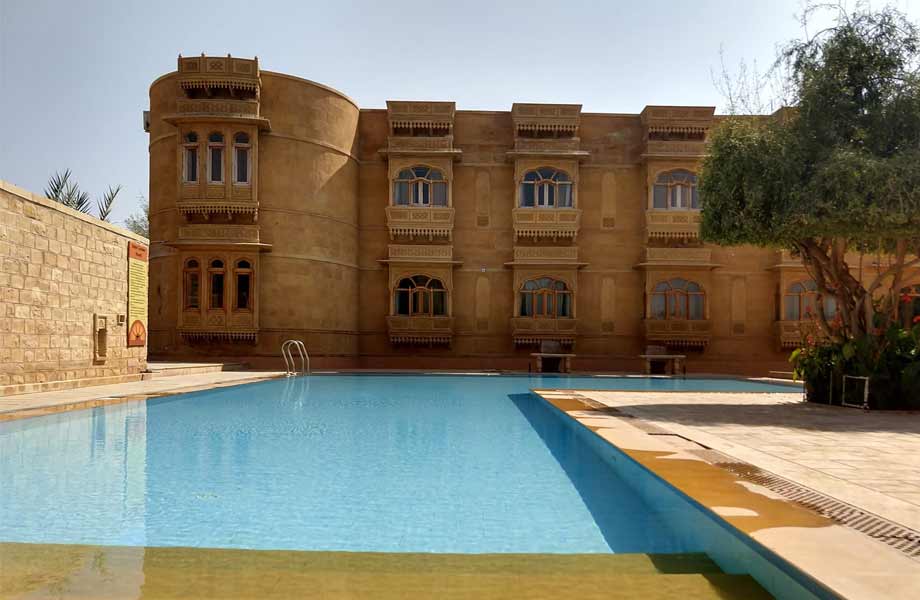
For most intimate wedding formats in India, a heritage haveli is the strongest single recommendation. The architecture does the emotional work that would otherwise require ₹8–12 lakh of additional décor. Jharokha windows, carved columns, and lime-plastered walls create a depth and authenticity that no constructed backdrop can match.
For clients in Agra specifically, heritage properties near the Taj Mahal zone offer an extraordinary backdrop that no other city in India can replicate. Coordinating through a trusted best wedding planner in Agra ensures access to heritage properties with full permit compliance and verified vendor access agreements — details that matter significantly in Agra's regulated monument zone.
2. Private Farmhouses and Countryside Estates
Farmhouses near Agra, Mathura, and across the NCR corridor are an excellent option for intimate weddings that want complete creative control. The absence of venue restrictions means a skilled decor management company in Agra can build the entire atmosphere from scratch — layout, lighting, texture, and floralscape — exactly to the brief without negotiating around what the venue allows or prohibits.
3. Boutique Hotels and Private Villa Resorts
Boutique hotel properties in Udaipur are in a category of their own for intimate weddings. Lake-facing properties with private ghats, garden pavilions, and rooftop terraces create settings that guests experience as genuinely extraordinary. When working on a wedding destination in Udaipur, the view of Lake Pichola and the Aravalli hills functions as a natural visual anchor that no constructed backdrop can match. Book 12–18 months ahead for peak October to February dates.
4. Forest Retreats and Eco-Resort Venues
For clients who prioritise immersive experience over traditional aesthetics, a forest retreat or eco-resort is genuinely different from any other venue type. Properties in Coorg, Wayanad, Jim Corbett, and Uttarakhand offer multi-day experiences where the wedding itself is one part of a larger experiential journey. Guest counts of 15 to 40 work best — small enough that the property feels curated around them.
The planning complexity is higher. Remote locations require vendor transport coordination, generator verification, and weather contingency planning. But for the right client, the outcome — a wedding embedded in nature, away from every familiar context — is profoundly memorable and generates exceptional referral activity.
5. Rooftop Gardens and Terrace Venues
Rooftop venues in Agra, Jaipur, and Delhi offer urban accessibility combined with a sense of elevation and openness that indoor venues cannot replicate. In Agra specifically, rooftop venues with a clear sightline to the Taj Mahal at dusk are among the most photographically powerful intimate wedding settings available anywhere in India.
The capacity sweet spot is 15 to 45 guests. Beyond that, rooftop venues tend to feel crowded rather than intimate. For planning purposes, always verify structural load capacity, confirm power access for catering equipment, and understand the noise ordinance compliance requirements for evening events.
6. Private Homes and Family Estates
For genuinely intimate weddings — particularly those under 40 guests where the personal connection to the space is itself meaningful — a private home or family estate delivers an emotional resonance that no rented property can replicate. The walls carry history. The garden is recognisable to guests. The setting is entirely unique.
The logistical requirements are significant. An experienced planner must manage temporary infrastructure: catering stations, power, lighting rigs, sound systems, and sanitation — all installed without compromising the home's own character. This is where partnership with a specialist decor management company in Agra, Shubh Prarambh becomes essential — the ability to build a complete event environment within an existing residential setting is a distinct skill-set that not all decoration teams possess.
7. Desert Camps and Open-Landscape Venues
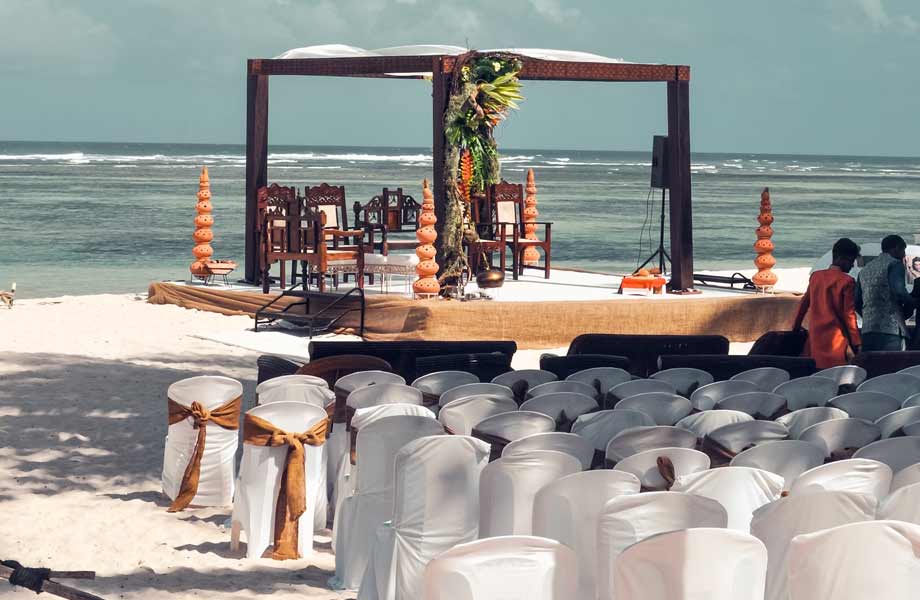
A candlelit desert wedding in Jaisalmer — star-filled sky overhead, dunes extending in every direction, camel silhouettes at sunset — is an experience that sits in a category by itself. For intimate weddings between 20 and 60 guests, a desert camp creates a completely self-contained world that guests travel to intentionally, which itself creates a sense of occasion before the ceremony even begins.
The planning requirements for a desert wedding are substantial. Power, water, catering infrastructure, guest transport, and medical emergency access all require specific coordination. Working with a specialist desert wedding destination company in Jaisalmer is not optional here — it's the difference between a seamless magical experience and a logistical disaster. Local expertise in Jaisalmer's vendor ecosystem and permit landscape is non-negotiable.
8. Hill Station Resorts and Mountain Properties
Mountain weddings in Himachal Pradesh, Uttarakhand, Sikkim, and Meghalaya offer cool temperatures, pine-framed landscapes, and a sense of genuine escape from urban life. For intimate weddings, the scale of the landscape actually works in your favour — rather than making small groups feel small, mountain settings make them feel like an expedition together.
Planning a destination wedding in hill station India requires specific expertise: road access windows, weather contingency planning, generator requirements at altitude, and vendor coordination across locations with limited local supply chains. The best outcomes always involve planners who have executed events in the specific hill station in question — not just mountain destinations in general.
How to Choose the Right Venue?
Whether you're advising a direct client or coordinating with another agency, this six-step process ensures venue type selection is strategic rather than intuitive.
1. Confirm the real guest count (not the estimate)
Couples routinely overestimate and then underestimate their guest list. Get a confirmed count within 10% accuracy before shortlisting venue types. The 60–70% capacity rule — booking a venue at 60 to 70% of its stated maximum — only works when you have an accurate headcount.
2. Define the aesthetic vision in one sentence
Ask the client to complete this sentence: "When guests walk in, we want them to feel ___." Heritage grandeur, natural warmth, urban sophistication, and desert escape are all legitimate answers — each points to a specific venue type. The answer eliminates multiple categories immediately.
3. Establish the true total budget
Venue fee alone is never the real number. Add minimum F&B commitments, external vendor fees, accommodation, transport, and a 12% contingency buffer. A venue quoted at ₹4 lakh may cost ₹7.5 lakh in total committed spend. This calculation determines which venue types are genuinely viable.
4. Match venue type to the event structure
A full three-day intimate wedding (mehendi, sangeet, ceremony, reception) has different venue requirements than a single-event ceremony and dinner. Multi-day events need either on-site accommodation or a venue with strong transport logistics. Confirm the full event programme before shortlisting.
5. Verify the exclusivity clause in writing
Many beautiful boutique properties run two events simultaneously by dividing the property. For an intimate wedding, this is almost always a bad outcome — it compromises the sense of privacy and limits use of shared spaces. Confirm full-property exclusivity before any deposit is paid.
“Read also: How to Plan a Destination Wedding in Udaipur”
6. Conduct or commission a professional site visit
No venue should be booked based on photos alone. If the client cannot visit, a trusted on-ground coordinator should video-call from the space with honest commentary on what the photos overstate. For clients planning from outside Agra or from abroad, this on-ground representation is a core part of what a quality planning firm like Shubh Prarmbh provides.
7 Common Venue Selection Mistakes (And How to Prevent Them)
1. Choosing a venue by maximum capacity, not comfortable capacity
The stated "maximum" of 200 guests at 40% fill rate produces an empty, cold experience. Always use 60–70% of maximum as the target booking size. Confirm this calculation with the venue before signing.
2. Overlooking acoustics
Tiled or stone-floored courtyards — beautiful as they are — can make speeches unintelligible. Always ask about in-house sound infrastructure or budget for a professional audio setup with appropriate speaker placement.
3. Booking without a verified site visit
Wide-angle photography and curated lighting make every venue look better than it is in daily use. If clients cannot visit, arrange a live video walkthrough with honest commentary — especially for destination bookings in Agra or Jaipur.
4. Ignoring the exclusivity clause
Many boutique properties run two events by dividing the space. For an intimate wedding, this compromises privacy and limits the use of shared areas like gardens and reception lobbies. Get exclusivity confirmed and documented.
5. No weather contingency for outdoor venues
February fog in Agra, November sea-breezes in Goa, March rain in Himachal — weather events occur more frequently than couples expect. A fabric tent contingency plan should be part of every outdoor venue contract.
6. Missing vendor load-in timing restrictions
Some heritage properties restrict vendor access to after 8 AM, making a 10 AM ceremony impossible to execute with appropriate décor. Confirm setup windows specifically — not just event hours — before finalising the booking.
7. Assuming a beautiful venue needs no décor investment
Heritage and boutique venues still have raw corners, inconsistent lighting zones, and furniture gaps. A professional décor team enhances — rather than replaces — the venue's inherent character. Budget accordingly.
Conclusion: The Right Venue Type Changes Everything
After walking through eight venue types, a six-step selection process, an honest cost breakdown, and real client case studies, the answer to what is the best type of venue for an intimate wedding becomes clear — it's the venue that makes your specific guest count feel deliberate, connected, and celebrated rather than undersized and overlooked.
For the majority of intimate weddings in India, a heritage haveli or boutique heritage property — booked at 60–70% of its stated capacity with full exclusivity and a trusted on-ground planning team — delivers the highest client satisfaction outcomes. For couples who want something entirely different, a desert camp in Jaisalmer, a forest retreat in Coorg, or a lake-facing boutique in Udaipur each offer their own distinct and irreplicable experience.
What connects all the best intimate venue choices is this: they were selected strategically, not impulsively. The venue type was matched to the guest count, the aesthetic brief, the season, and the true budget. And the execution was managed by professionals who knew the property, the vendors, and the local landscape.
At Shubh Prarmbh, that is exactly what we do — from intimate weddings in Agra to destination wedding planning near Delhi, from Jaipur's heritage havelis to Jaisalmer's desert camps. If you're advising a client, coordinating a corporate celebration, or planning your own intimate wedding, we'd welcome the conversation.
Frequently Asked Questions (FAQs)
These five questions are optimised for Google's People Also Ask feature and Featured Snippets. Each answer is structured for direct pull without requiring full article context.
Q1.What is the best type of venue for an intimate wedding?
The best type of venue for an intimate wedding is one where the guest count fills 60–70% of the stated maximum capacity. For most couples in India, this means a heritage haveli, boutique hotel, or private farmhouse with an appropriate courtyard or garden space. Heritage havelis are the top recommendation because the architecture creates warmth and atmosphere without requiring large décor budgets. The correct venue type is ultimately determined by three factors: the confirmed guest count, the desired aesthetic, and the total available budget including all ancillary costs.
Q2.How many guests is considered an intimate wedding in India?
In the Indian wedding industry, an intimate wedding typically refers to a celebration with 10 to 75 guests. This distinguishes it from a micro-wedding (under 20 guests, often elopement-adjacent) and from the traditional Indian wedding of 150 to 500 guests. At the 10–75 guest range, every attendee has a direct relationship with the couple, the venue size becomes critical, and the per-head experience quality is disproportionately higher than at larger celebrations.
Q3.What should I ask a venue before booking for an intimate wedding?
The ten most important questions to ask before booking a venue for an intimate wedding are: (1) Is this booking fully exclusive? (2) What is the minimum F&B commitment? (3) Can we bring our own vendors? (4) What is the weather contingency plan? (5) What are the noise and end-time restrictions? (6) How many hours of setup access do we get? (7) What does the generator backup cover? (8) Are there restrictions on open flames or fireworks? (9) Can we see a video from a recent event at a comparable guest count? (10) Are there concurrent events on our date at any part of the property?
Q4.Why is Agra a good destination for an intimate wedding?
Agra is one of India's most compelling destinations for intimate weddings for several reasons. It offers heritage haveli and rooftop venues with direct Taj Mahal views — a backdrop available nowhere else in the world. The city has a growing ecosystem of boutique heritage properties scaled for 20–60 guests. And for families spread across North India, Agra is accessible by rail from Delhi (under 2 hours on Gatimaan Express) and by road. Working with an established Shubh Prarmbh team as the best wedding planner in Agra ensures permit compliance near the monument zone, access to unlisted heritage properties, and on-ground vendor coordination throughout the event.
Related Articles

 Our
Story
Our
Story